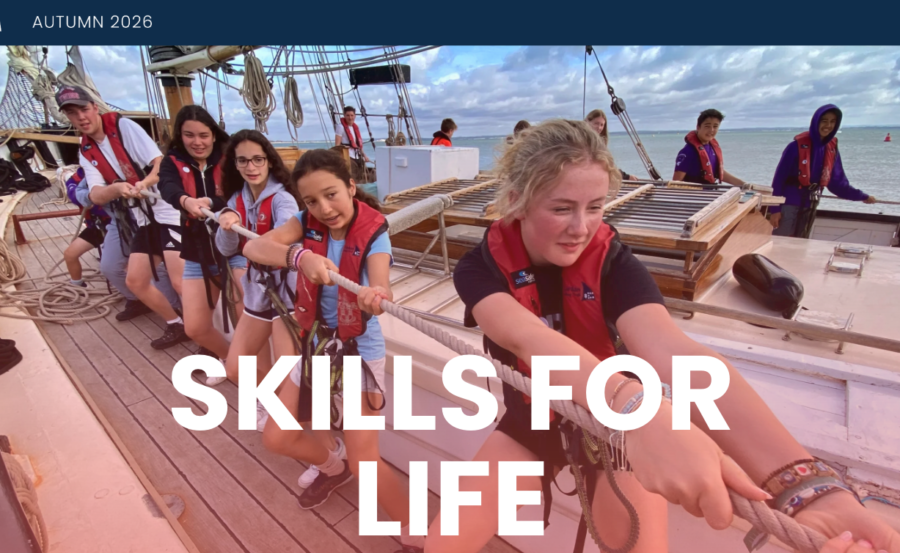
OYT Scotland Driving Engagement
Young people show improved engagement with education and within their local communities after an innovative sail training programme.
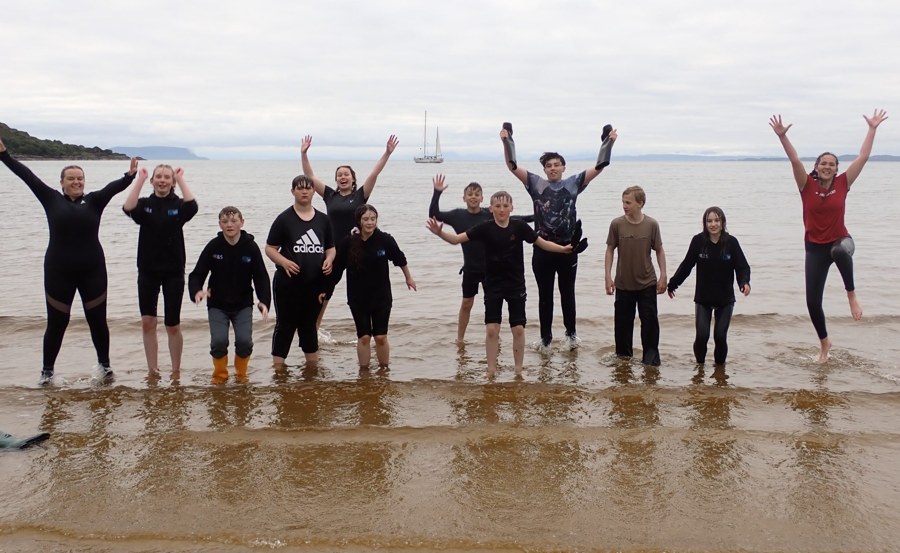
Enjoying a short break ashore. Credit OYT Scotland
For a young person who has stopped attending school, rarely leaves home or struggles to imagine a positive future, a sailing adventure may seem an unlikely way to reconnect with education, opportunities and their community. Yet OYT (Ocean Youth Trust) Scotland is seeing meaningful changes among young people taking part in its CashBack for Communities-funded ‘Turning the Tide with CashBack’ programme.
OYT Scotland is in its 10th year of funding through CashBack for Communities, with support delivered through three-year programmes. ‘Turning the Tide with CashBack’ is the latest programme and is now in its first year, building on three previous programmes: ‘On Course with CashBack’ (2017–20), ‘Change Tack with CashBack’ (2020–23) and ‘OnBoard with CashBack’ (2023–26).
CashBack for Communities is a Scottish Government programme that reinvests money recovered through the Proceeds of Crime Act into activities and opportunities for young people across Scotland.
OYT Scotland’s programme focuses on those disengaging from education, at risk of involvement in antisocial behaviour, affected by adverse childhood experiences (ACEs), or facing barriers including deprivation, care experience, disability and social isolation.
Understanding disengagement
Some young people stop attending school or withdraw from activities outside their home. Others struggle to trust adults, lack confidence in unfamiliar situations or see few opportunities ahead. Negative labels within their school or community can reinforce the belief that they have little worthwhile to contribute.
More than a five day voyage
OYT Scotland’s approach is unusual because the 5-day voyage sits within a much wider programme. Its seven stages provide up to 100 hours of supported activity, including preparatory workshops, outdoor activities, a five-day residential voyage on a 70-foot yacht, a community GiveBack activity and a celebration of what participants have achieved.
Before anyone steps onboard, OYT Scotland’s qualified youth workers meet the group within their own community. The workshops explain honestly what the voyage will involve, introduce activities on land and water, and help participants become familiar with the people who will support them.
For some participants, the experience is a genuine challenge. They may have never left their town, let alone spent five days living on a boat. They may worry about being away from home, or from someone they care for, about sleeping and eating onboard, falling overboard when they cannot swim, or simply letting the group down. The preparation does not remove these challenges, it makes it facing them feel possible.
By the time the voyage begins, youth workers understand more about individuals’ anxieties, how they respond when overwhelmed and the kind of support that will help them continue.
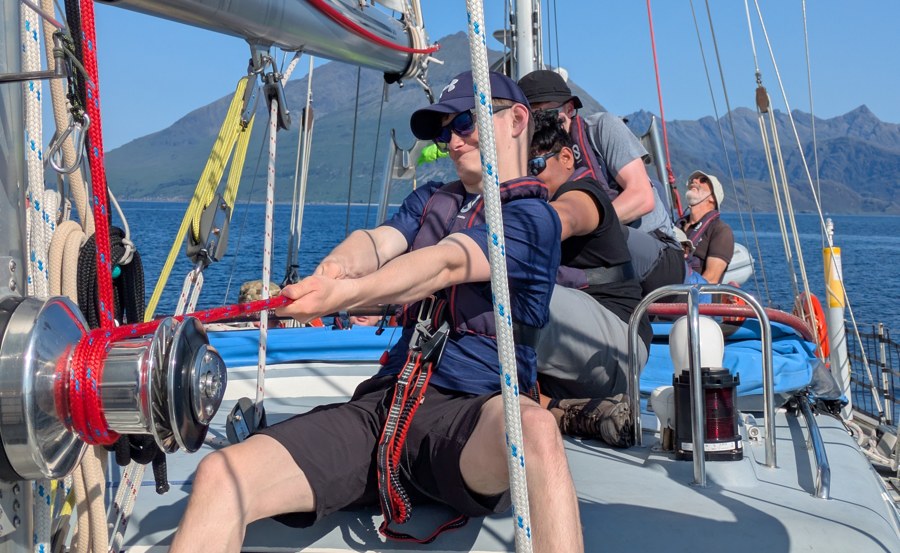
Sailing requires teamwork. Credit OYT Scotland
Conor McNamara, Youth Development Worker at OYT Scotland, believes this combination of youth work and sail training creates an unusually powerful setting for development.
“Something about being away from land, away from your community and away from the environment you grew up in makes sail training so powerful. It gives young people a safe space to breathe, to feel secure and to be part of a community.”
Conor McNamara - Youth Development Worker, OYT Scotland
Turning experience into learning
Sailing creates the conditions for change, while youth-work practice helps turn experience into learning. Throughout the programme, participants are encouraged to use personal logbooks to set and monitor their own goals. At the end of each day, time is set aside for them to reflect on their progress.
“They’re constantly setting goals and reviewing those goals every day. What did you achieve today? How could you have done it better? If you could go back to the start of the day, would you approach it differently? Being able to review yourself and set a goal for what you want to achieve is a really positive skill that young people take away from the programme.”
Conor McNamara - Youth Development Worker, OYT Scotland
Onboard, the young people become part of a small, self-contained community with plenty of jobs. There are meals to prepare and clean up, logbooks to complete, sails to handle, and a boat to keep moving in the right direction.
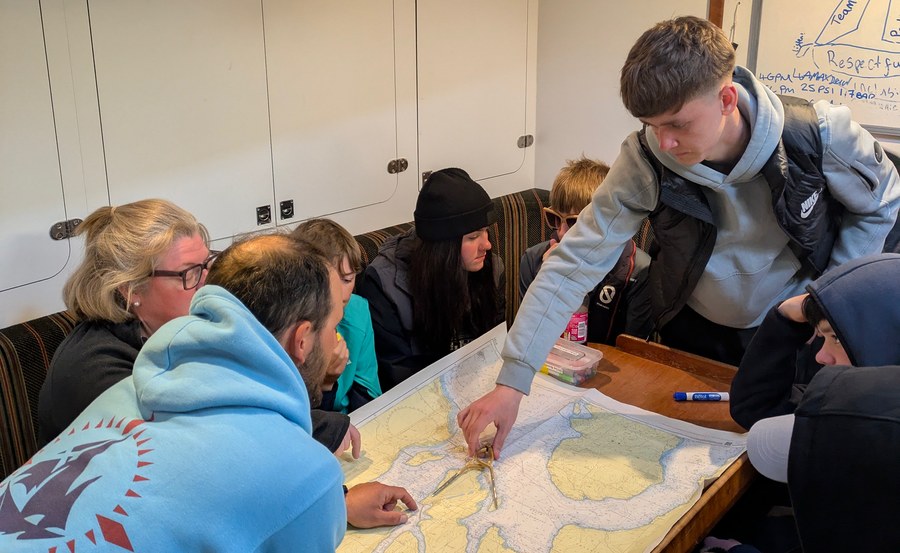
Learning how to plan a sailing passage. Credit OYT Scotland
The daily routine provides structure and predictability, but the responsibilities are real: everyone has a role and in the close confines of a boat it quickly becomes clear that the whole crew depends on each person doing their bit.
For some participants, this may be the first time an adult has trusted them with something genuinely important.
“A young person starts by helming the boat and then begins to question: if I can helm this boat, what else in my environment can I start to impact? What else around my community can I start to impact? That critical thinking and personal development is what really matters.”
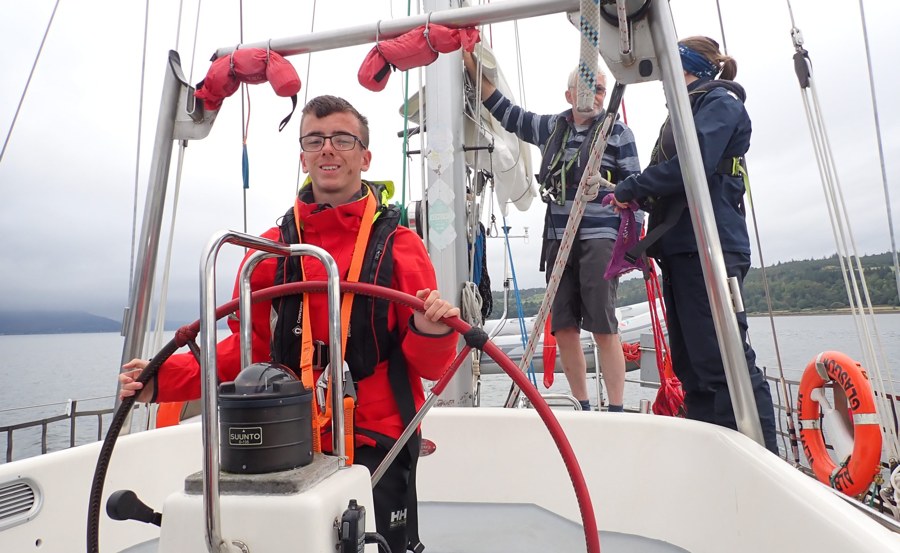
Taking the helm. Credit OYT Scotland
Change that lasts beyond the voyage
As part of the programme, participants complete accredited Scottish Qualification units in communication, numeracy, problem-solving and working with others, as well as gaining an RYA Start Yachting certificate. For some, these are the first qualifications they can list on their CV.
More profoundly, is the change in how they see themselves. They return with evidence that they can learn, contribute and succeed, creating a new starting point for engagement with education.
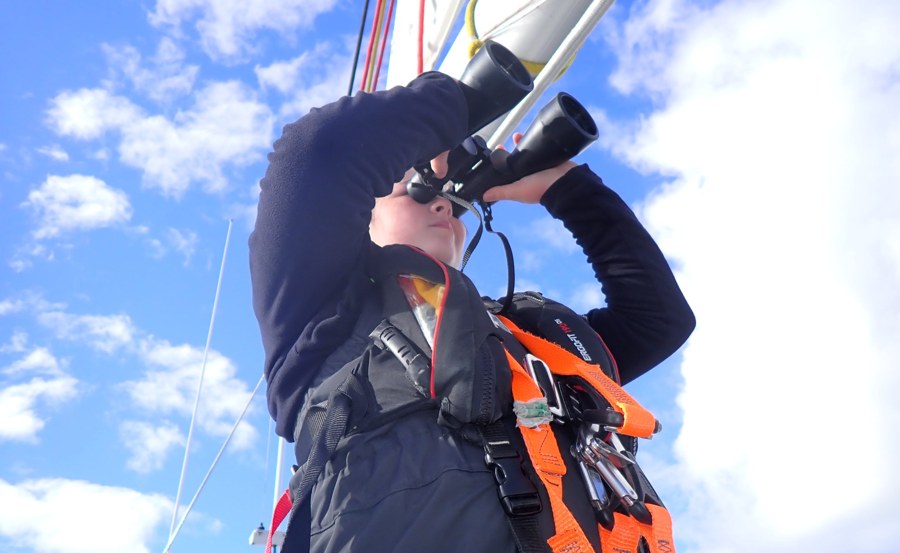
A fresh perspective. Credit OYT Scotland
Group leaders frequently report that young people communicate more confidently, show greater respect for others and become more willing to participate. Some establish healthier routines or return to school with a renewed sense of purpose.
The circumstances awaiting them at home may not have changed. However, the experience can help them recognise that the situation they are living in does not define who they are or what they may become.
“The real impact isn’t always seen straight away. Sometimes it comes five, ten or fifteen years later, when young people reflect and realise that experience gave them something.”
Giving something back
Towards the end of the programme, participants complete a community GiveBack activity. Rather than deciding for them, OYT Scotland asks the group what their community needs and how they could help. Previous groups have supported food banks and soup kitchens, painted community centres, visited care homes and prepared Christmas parcels.
This activity helps young people who may previously have been known for antisocial behaviour to be seen making a positive contribution. They experience an ability to improve their community rather than feeling excluded from it.
The results suggest that this reconnection continues beyond the activity itself. In the latest year, 65% of young people reported that their community connection and social interaction had improved, while 57% took up or increased their involvement in volunteering.
A new view of the future
For some, the programme opens an entirely new view of what their future could hold. Conor recalls one interaction that particularly stayed with him:
“While we were preparing lunch on the third or fourth day, one of the young people started asking me how I became a youth worker. Before the programme, she had largely disengaged from school, rarely left the house and was struggling significantly with anxiety. She told me, ‘I didn’t realise I wanted to do youth work until I saw you and the other youth worker doing it. I didn’t know this was what youth work could be.’
She is now applying to study community development at college. Small moments like that are incredibly precious to me. It was a youth worker who changed my own direction in life, and I love the idea that something I have done might help another young person go on to support others in the same way.”
A five-day voyage cannot remove every challenge a young person faces. But, delivered as part of a thoughtful and sustained youth-work programme, sail training can give them a different perspective on themselves: as someone who can learn, can be trusted and has something valuable to contribute to a crew, to their education and to their community.
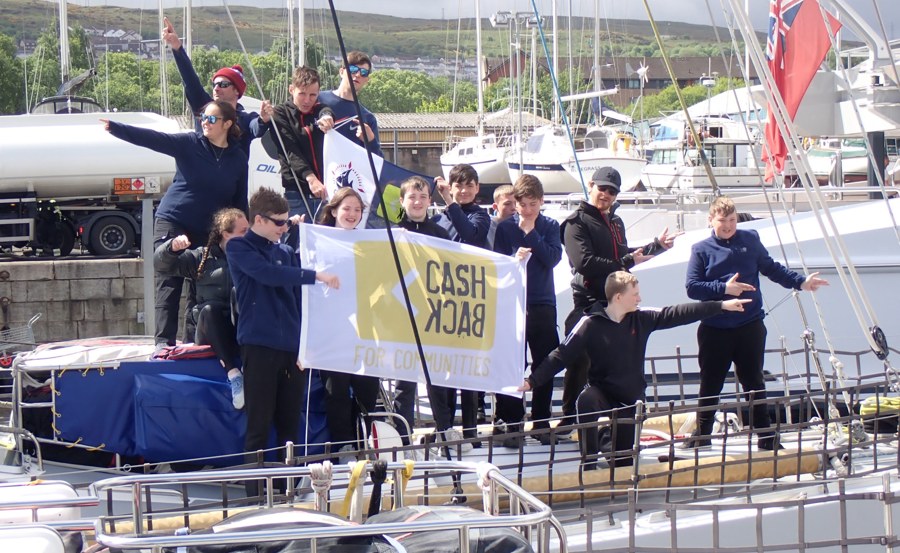
End of trip celebrations. Credit OYT Scotland
Impact Review 2026
Explore Our Impact
Our regular impact reviews neatly captures the activities and impact that our member organisations deliver so brilliantly through sail training. Last year, nearly 11,000 young people and individuals with disabilities and additional needs sailed with our 30 member charities.
More Recent News
Explore further updates from ASTO.